English
 中文
中文 Español
 русский
 français
 português
 العربية
 Deutsch
 italiano
 한국어
한국어 Polska
×
Drill rod fracture is one of the most costly and disruptive failures in rock drilling operations. When a rod breaks downhole, it not only halts production but often requires fishing operations that can consume entire shifts or even result in lost holes. Understanding why drill rods fail—whether from material defects, improper heat treatment, fatigue cracking, or operational errors—is the first step toward prevention. This article examines the causes of drill rod fracture and outlines practical solutions based on field-tested best practices and materials science.
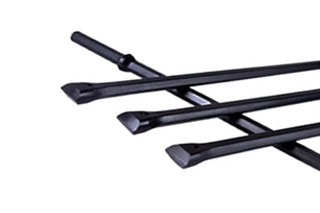
Drill rod is one of the important accessories of rock drill. It is a necessary tool in rock drilling. Drill rod must be able to bear significant torque, torsion, bending and vibration in the process of rotation, so its quality directly affects the efficiency of rock drilling.
Most drill pipe fractures are fatigue-related failures caused by repeated impact stress, stress concentration, and progressive crack propagation during drilling operations.
| Cause Category | Specific Cause | Solution |
| Material & specification | Material or thickness does not meet technical requirements | Select drill rods conforming to technical specifications |
| Surface defect | Serious scratches on the drill rod body | Avoid using rods with severe scratches; replace if needed |
| Manufacturing & heat treatment | Poor temperature control or unreasonable process during forging/heat treatment creates thermal stress cracks | Optimize heat treatment: oil quenching + tempering at 400–600°C |
| Operational (wear) | Long service life leads to accumulated surface damage | Replace with new drill rod in time |
| Operational (impact) | Excessive speed when reaming or drilling long pilot holes; bit suddenly hits hard object causing torque spike | Control rotation speed and feed force reasonably |
(1) The drill rod is used for a long time, resulting in more surface damage.
(2) When reaming or drilling pilot holes for a long distance, if the speed is too fast, the drill bit will suddenly hit a hard object, which will produce a strong impact force, and the torque will suddenly increase, resulting in the fracture of the drill rod.
(3) Excessive torque beyond the drill pipe's design limit can rapidly increase stress concentration and lead to deformation or sudden fracture.
Optimizing drilling parameters reduces fracture risk. Hard rock generally requires lower rotation speeds. If the feed pressure is too low, the drill string whips and induces bending stress. If the feed pressure is too high, the bit jams and the rod experiences torque overload. The rod's torque capacity should have a safety margin over the maximum rig output.
During rock drilling, the mining drill rod is subjected to thousands of high-frequency impact cycles every minute, along with alternating compressive, tensile, bending, and shear stresses. When these repeated stresses exceed the material’s fatigue limit, microscopic cracks can gradually form and propagate under continuous stress concentration. In underground operations, mine water and humid air can further accelerate crack growth through corrosion fatigue, eventually leading to drill rod fracture. For more information about drilling equipment and solutions, explore leading rock drill manufacturers.
(1) Drill rods conforming to technical specifications shall be selected.
(2) Avoid using drill rods with severe scratches.
(3) Replace worn or fatigued drill pipes before visible cracking, deformation, or severe thread wear develops.
(4) During operation, the rotating speed and propulsive force of drill rod shall be reasonably controlled.
(5) The hard rock drilling shall be equipped with an appropriate drill rod.
(6) Implement regular non‑destructive testing (NDT). Magnetic particle inspection and ultrasonic testing can detect microscopic cracks and internal defects before they lead to failure.
(7) Adopt proper thread lubrication and torque control. Worn or corroded threads, as well as threads not tightened to proper torque during assembly, create uneven local stress distribution that initiates cracks.
(8) Avoid mixing rod components from different manufacturers. Variations in thread dimensions between manufacturers can lead to stress concentrations and increased fracture risk. A rod string is only as strong as its weakest connection.
(9) Monitor rod service life and replace proactively. Rods should be retired before fatigue life is fully depleted rather than run until failure. Surface-hardened rods offer excellent toughness and resist impact and bending stresses, making them especially suitable for interbedded or fractured rock. Carburized rods provide high surface hardness, strong wear resistance, and longer fatigue life for deep-hole drilling.
Drill rod fracture is rarely caused by a single issue. In most drilling operations, failure develops gradually as repeated impact stress, excessive torque, corrosion, poor heat treatment, and improper operating conditions combine to accelerate fatigue crack growth over time.
Effective prevention starts with matching the drill rod material and strength grade to the actual drilling environment. Proper heat treatment, controlled rotation speed, stable feed pressure, and correct thread lubrication all help reduce stress concentration and unnecessary vibration during operation. Avoiding sudden impact loads when drilling conditions change is also critical for extending drill rod service life.
Regular inspection remains one of the most effective ways to prevent unexpected failure. Surface cracks, thread root damage, bending deformation, and fatigue marks should be identified before catastrophic fracture occurs. Maintaining compatibility across the entire drill rod string is equally important, since thread mismatch between components can create additional stress points.
Ultimately, reducing drill rod fracture is not just about using stronger materials—it requires a combination of correct material selection, proper drilling practices, and proactive maintenance. When these factors are properly managed, drilling operations can significantly reduce downtime, lower replacement costs, and improve overall drilling efficiency.
For high‑quality drill rods manufactured to strict material and heat treatment specifications, contact Litian Heavy Industry or browse our drill rod product line.
Q1: How does improper torque control lead to drill rod fracture?
Improper torque control is a primary cause of drill rod failure. When the makeup torque is insufficient, the connection is loose, causing impact energy to generate strong vibration and rebound within the thread gap, leading to severe stress concentration at the thread root. Conversely, excessive torque can cause thread stripping or galling. Proper torque control ensures tight connections and reduces fracture risk. Read more: Basic Requirements for Threaded Drill Rod
Q2: What role does thread wear play in drill rod failure?
Thread wear is the most common failure form of drill rods. Worn or damaged threads create uneven stress distribution and increase clearance between connections, reducing energy transmission efficiency and inducing cracks. Regular thread inspection and timely replacement of worn threads are essential to prevent fracture. Read more: Common Mistakes to Avoid with Drill Extension Rods
Q3: Why is daily inspection of drill rods important for preventing fracture?
Daily inspection helps detect early warning signs such as surface scratches, thread wear, and micro-cracks before they develop into catastrophic failures. Research shows that fatigue microcracks typically initiate from surface imperfections like scratches or corrosion pits. Without regular inspection, these small defects propagate under cyclic loading and eventually cause rod fracture. Read more: Maintenance and Inspection procedures of the drill shank adapter
Q4: How does improper heat treatment cause drill rod fracture?
Improper heat treatment—such as poor temperature control during quenching or insufficient tempering—leaves the drill rod brittle and introduces residual thermal stress, making it prone to fracture under impact and torsion. Excessive quenching increases brittleness, while insufficient tempering fails to eliminate quenching stress. Read more: Important Parts And Working Principle Of Hydraulic Rock Drill
Q5: What is the most common failure mode for drill rods in rock drilling?
Fatigue is the most common failure mode, accounting for approximately 75% of drill rod failures in field operations. Under repeated impact and torsion cycles (about 2,000 cycles per minute), microcracks initiate at thread roots, surface scratches, or corrosion pits. These cracks propagate over time until a sudden fracture occurs. The characteristic "beach marks" on the fracture surface are a telltale sign of fatigue failure. Read more: Rock Drilling Bits Classification
Failure analyses and wear mechanisms of rock drill rods, a case study – Engineering Failure Analysis, 2019. DOI: 10.1016/j.engfailanal.2018.12.008. (Examination of six failed drill rods, two different crack initiation mechanisms observed.)
Failure Analysis of Hydraulic Rotary Drill Rods in a Limestone Mine – International Journal of Mechanical Engineering and Robotics Research, Vol. 5, No. 4, October 2016, pp. 251-254. DOI: 10.18178/ijmerr.5.4.251-254. (Fatigue failure analysis with beach mark evidence on fracture surface.)
Cause Analysis on Pricking Leakage of Double-shoulder Drill Rod Joint – Failure Analysis and Prevention, 2014, 9(2): 104-109. DOI: 10.3969/j.issn.1673-6214.2014.02.010. (Lower make-up torque leads to reduced thread fatigue strength; multisource fatigue cracks form at thread root due to stress concentration.)
Cause Analysis on Fracture of a Drill-Stem Sub – Physical Testing and Chemical Analysis Part A: Physical Testing, 2017, 53(8): 585-589. DOI: 10.11973/lhjy-wl201708011. (Fatigue fracture caused by stress concentration at internal thread root.)
Analysis of Failure Modes of R32 Drill Rod and Discussion on Improving Its Manufacturing Quality – (Design and machining of end faces and transition grooves in compliance with standards is effective in preventing premature fracture.)
T51 Drill Rod Fracture Analysis and Prevention Recommendations – (Fracture caused by combined effect of stress concentration and material fatigue.)
Failure analysis of drill rod in short term fracture – Physics Examination and Testing, 2022, 40(2): 37-41. DOI: 10.13228/j.boyuan.issn1001-0777.20210030. (Surface decarburization during heating process before forging leads to short-term fracture.)
Chinese National Standard GB/T 6480-2015: Carbide drill bits for rock drilling – Standardization Administration of China. (Reference only; no public link.)
ISO 11886:2025: Drilling and foundation machinery — Commercial specifications – International Organization for Standardization, Geneva.
ISO/DIS 18758:2025: Mining and earth-moving machinery — Rock drill rigs — Safety requirements – International Organization for Standardization, Geneva.

Litian is a professional manufacturer focused on the production of rock drilling tools and excavation tools.
Learn More >